Tel : 86-0755-89999957 /
  Email : colin@aohuadz.com






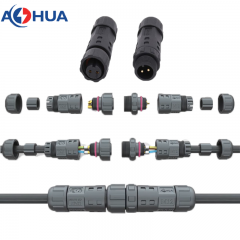
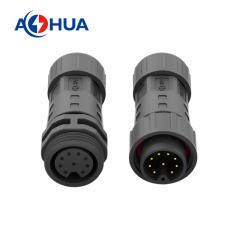
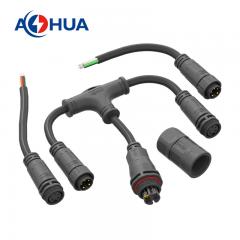
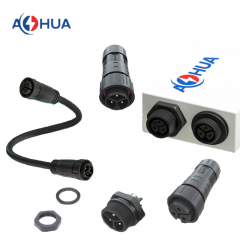
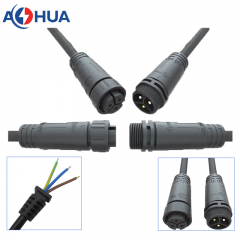
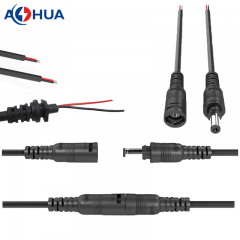
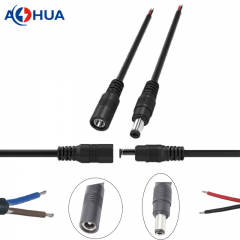
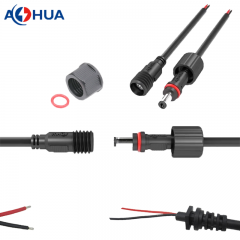

For decades, a connector was a passive component. You installed it, hoped it stayed sealed, and only thought about it when something went wrong.
That era is ending.
The waterproof connector industry is undergoing a fundamental shift. Driven by the Industrial Internet of Things (IIoT), Industry 4.0, and the relentless demand for higher uptime, connectors are becoming smart.
Imagine a connector that tells you:
-
When its seal is starting to degrade
-
When moisture has entered the housing
-
When contact resistance is rising
-
When it needs maintenance – before it fails
This isn't science fiction. It's happening now. And at AOHUA, we're at the forefront.
A smart waterproof connector is a traditional sealed connector augmented with embedded sensing and communication capabilities.
At minimum, a smart connector includes:
Consider this: in industrial environments, unplanned downtime costs an average of $5,000 to $50,000 per minute depending on the industry. A single connector failure – often preventable – can halt an entire production line.
Traditional connectors offer no warning. They work perfectly until they don't. Then you scramble to diagnose, repair, and restart.
Smart connectors flip this model:
Part 3: What Can a Smart Waterproof Connector Monitor?
Part 1: What Is a “Smart” Waterproof Connector?
Component
Function
Embedded sensors
Monitor temperature, humidity, contact resistance, or mechanical strain
Data processing
On-board or near-board logic to interpret sensor data
Communication interface
Wired (IO-Link, CAN bus) or wireless (BLE, Zigbee) to transmit data
Alert system
Local indicator (LED) or remote notification when parameters exceed thresholds
Part 2: Why Smart Connectors Matter – The Cost of Unplanned Downtime
Traditional Connector
Smart Connector
Fail → Detect → Repair → Resume
Monitor → Predict → Maintain → Prevent
Reactive maintenance
Predictive maintenance
Downtime measured in hours
Downtime measured in minutes
You find out when it's too late
You find out before it's too late
Here are the most common parameters being integrated into next-generation waterproof connectors:
Early detection of moisture ingress is the holy grail. A tiny humidity sensor inside the connector housing can detect rising moisture levels long before condensation forms or corrosion begins.
Benefit: You get a warning weeks or months before failure. You can schedule maintenance during planned downtime, not emergency shutdowns.
Excessive heat accelerates seal aging, increases contact resistance, and can indicate overcurrent conditions. A temperature sensor provides continuous thermal monitoring.
Benefit: Identify overheating connectors before they melt or catch fire – especially critical in high-power EV charging and industrial motor applications.
Increased contact resistance generates heat and indicates corrosion or loose connections. By measuring voltage drop across each contact pair, a smart connector can detect degradation early.
Benefit: Pinpoint which contact is failing before the entire connector needs replacement.
Accelerometers can detect excessive vibration or cable strain that might compromise the seal over time.
Benefit: Identify installation issues or equipment problems that are stressing connectors – often the root cause of premature failure.
A simple sensor can confirm whether the connector is fully mated – eliminating the “did we plug it in all the way?” uncertainty.
Benefit: Prevent failures caused by incomplete mating – a surprisingly common issue.
Public EV chargers operate 24/7 in all weather. A connector that fails leaves a driver stranded and damages the network operator's reputation.
Smart connector solution: Humidity and temperature sensors inside the charging connector report back to the network operations center. If moisture is detected, the charger can be flagged for inspection before it fails – and before a driver arrives.
Solar farms have thousands of data connections monitoring panel performance. A single failed connector can take an entire string offline, reducing energy yield.
Smart connector solution: Each connector reports its own health. Maintenance teams can pinpoint exactly which connector needs attention – no more guessing, no more climbing every row to find the fault.
Factories are increasingly sensor-rich environments. Every connection is a potential failure point.
Smart connector solution: Connectors with embedded IO-Link communication provide real-time health data directly to the PLC or SCADA system. Maintenance becomes data-driven, not calendar-driven.
Accessing connectors on offshore platforms or ships is expensive and dangerous. You want to know their condition before sending a technician.
Smart connector solution: Remote monitoring of seal integrity and internal conditions means maintenance trips are only scheduled when needed – not on a fixed schedule.
How do you fit sensors and electronics into a connector that also needs to be completely waterproof?
Miniaturization is key. Modern humidity, temperature, and even pressure sensors are smaller than a grain of rice. They can be embedded directly into the connector housing during molding.
For existing connector families, add-on modules can be attached to the backshell – containing sensors, processing, and communication – without changing the primary sealing interface.
Bluetooth Low Energy (BLE) or Zigbee modules allow connectors to transmit data without additional wiring – critical when adding smart functionality to existing designs.
IO-Link is becoming the standard for industrial sensor communication. Smart connectors with IO-Link can plug directly into existing industrial networks
If you're considering smart connectors for your next project, ask these questions:
What parameters do your smart connectors monitor? – Humidity? Temperature? Contact resistance? All of the above?
How is data transmitted? – Wired (IO-Link, CAN) or wireless? Does it require additional infrastructure?
Is the smart functionality integrated or add-on? – Integrated is more robust; add-on offers flexibility.
Can the data be integrated into our existing SCADA or monitoring system? – Look for open protocols, not proprietary lock-in.
Does the smart feature compromise the IP rating? – The connector must remain fully sealed despite the added electronics.
1. Internal Humidity and Moisture
2. Temperature
3. Contact Resistance
4. Mechanical Strain and Vibration
5. Connection Status (Mated/Unmated)
Application 1: Electric Vehicle Charging Infrastructure
Application 2: Solar Farm Monitoring
Application 3: Industrial Automation and IIoT
Application 4: Marine and Offshore
Part 5: The Technology Behind Smart Connectors
Approach 1: Integrated Sensor Chips
Approach 2: Add-on Smart Modules
Approach 3: Wireless Communication
Approach 4: IO-Link Integration
Part 6: What This Means for You – Questions to Ask Your Supplier
At AOHUA, we believe the future of waterproof connectors is intelligent.
We are actively developing our own smart connector platform – combining our proven sealing technology with embedded sensing and IO-Link communication. Our goal is simple: zero unplanned downtime due to connector failure.
We're not there yet with every series. But we're testing, learning, and iterating. And we'd love to partner with forward-thinking customers who want to shape this future together.
If you have a specific application where smart monitoring could make a difference, let's talk.
Part 7: Our Commitment – The Future of Connectivity

 86-0755-89999957
 colin@aohuadz.com