Tel : 86-0755-89999957 /
  Email : colin@aohuadz.com






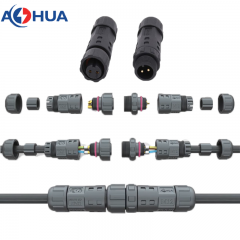
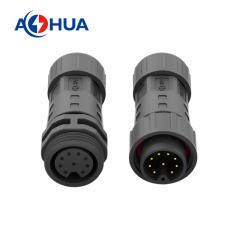
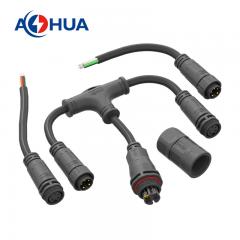
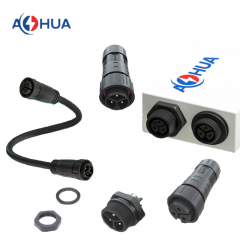

Story 1: The EV Charger That Became a Swimming Pool
The problem: A public EV charging station in a coastal town kept tripping its breaker after every heavy rain. The operator had replaced the connector twice in six months.
What we found: The station was installed in a low spot. During storms, water pooled around the base – and the connector was located just 6 inches above ground. The “waterproof” connector (rated IP67) was sitting in standing water for hours, not just splashed.
Why IP67 wasn’t enough: IP67 is tested for 30 minutes at 1 meter depth. This connector was submerged intermittently for 4+ hours at a time, and also exposed to salt spray from the coast.
Our solution: We replaced it with an IP68 connector rated for continuous submersion (10 meters, 7 days) plus a nickel-plated brass housing for salt corrosion resistance. We also added a drip loop and raised the mounting height.
Result: The connector has been dry for two years. The operator now specs IP68 as standard for all coastal installations.
Lesson: Match IP rating to the worst-case real scenario, not the “typical” one.
The problem: A solar farm in rural Australia reported intermittent data loss from one string of panels. Technicians checked everything – inverters, monitoring box, cables. No obvious fault.
What we found: After a week of head‑scratching, a site manager noticed hoof prints near the cable tray. A local goat had been chewing on the cable jacket. The cable wasn’t cut – but the connector’s cable gland had been pulled partially loose. Moisture got in during morning dew.
The unexpected fix: The customer installed a simple metal mesh sleeve over the exposed cables. No goat since.
Our solution: We supplied a longer, flexible conduit adapter that extended the connector’s strain relief back 30cm. Even if an animal tugged the cable, the gland wouldn’t move.
Result: The connector has been re‑sealed and working for 18 months. The goat found other things to chew.
Lesson: Sometimes the environment has four legs. Plan for wildlife.
The problem: A commercial fishing boat’s depth sounder would work fine at the dock, then fail randomly once they were 10 miles out. The captain had replaced the waterproof connector twice.
What we found: We asked the captain to send us the failed connector – still sealed in a bag. When we opened it, there was salt crystal buildup inside. Not a leak – condensation.
Why condensation happened: The electronics box was heated. The connector was cold from sea spray. Every time the boat moved, warm moist air from the box met the cold connector and condensed inside. Over a season, enough moisture accumulated to corrode the pins.
Our solution: We replaced the standard solid connector with a version that included a small Gore‑type vent (pressure equalizing membrane) that lets vapor escape but not liquid water in. We also added dielectric grease on the pins.
Result: Two years without failure. The captain now opens and airs out his connectors once a month.
Lesson: Water can get in without a leak – condensation is real. Use vented connectors in high‑humidity, temperature‑cycling environments.
The problem: A research team needed to place a temperature sensor at the bottom of a frozen lake in northern Canada. The sensor would stay there for six months, through -40°C winters and spring thaw. Their off‑the‑shelf “waterproof” connector cracked at -20°C.
What we found: The connector’s housing was standard PBT plastic, which becomes brittle below -30°C. The O‑ring was NBR rubber, which hardens and loses sealing ability below -25°C.
Our solution: We supplied a metal‑housed connector (brass, nickel plated) with silicone seals rated to -50°C. We also used a special low‑temperature grease on the threads to prevent freezing shut.
Result: The sensor transmitted data all winter. When they retrieved it in spring, the connector opened easily and showed no moisture inside. The research team now uses our Arctic‑rated series for all cold‑climate work.
Lesson: Standard “-40°C” ratings on datasheets are not all equal. Ask for low‑temperature impact testing data.
The problem: A city utility had a flow monitor in a sewer manhole that flooded several times a year – sometimes for weeks. Their expensive IP68 connector kept failing after each flood.
What we found: The connector was rated IP68 for freshwater. Sewage water contains acids, gases, and abrasive particles. The seal material (silicone) was chemically attacked by the environment. The metal contacts were also corroding from hydrogen sulfide.
Our solution: We switched to a connector with a Viton (FKM) seal – highly resistant to chemicals, oils, and acids. We also upgraded the contact plating to gold over nickel (vs. standard tin) and added a second internal O‑ring as a backup.
Result: The same connector has survived three flood cycles and is still sealed. The city now uses our “sewer grade” series for all wet‑well installations.
Lesson: “Waterproof” is not “chemical‑proof.” Know what’s in your water.
Looking back at all five cases, a few patterns emerge:
Most important lesson: A connector that fails in the lab is easy to fix. A connector that fails in the field – after months of working – requires detective work. But the clues are always there.
Have you had an unusual connector failure – or a creative fix that worked? We’d love to hear it. Every story helps us design better products and helps other engineers avoid the same trap.
Share your story by using the form on our contact page. If we use your story (anonymously), we’ll send you a thank‑you gift.
These five stories barely scratch the surface. If you’re facing a challenging application – extreme temperatures, weird chemicals, curious animals, or just relentless rain – our engineering team has likely seen something similar.
Contact us with your problem. We’ll recommend a connector (ours or even a competitor’s) to get you running.
Q: Do you really have a “sewer grade” connector?
Q: How can I test if condensation is my problem?
Q: What is a vented connector?
Q: Can I use dielectric grease in cold temperatures?
Story 2: The Goat That Ate a Solar Farm
Story 3: The Fishing Boat’s Mystery Intermittent Failure
Story 4: The Frozen Lake Sensor
Story 5: The Underwater Manhole That Refused to Die
What These Stories Teach Us
Common Theme
Right Solution
IP rating mismatch (intermittent vs. continuous submersion)
Choose IP68 with depth/duration spec, not just “IP68”
Condensation from thermal cycling
Use vented connectors or dielectric grease + regular airing
Extreme cold embrittlement
Metal housing + silicone or Viton seals + low‑temp grease
Chemical attack (sewage, salt, acids)
Viton seals + gold‑plated contacts + extra O‑rings
Wildlife or mechanical tugging
Strain relief, conduit, or armor
Your Turn: Send Us Your Story
Need Help With a Tough Environment?
FAQ – Quick Answers
A: Not an official series name – but we do offer Viton seals and upgraded plating that work in harsh chemical environments. Ask for our “chemical resistance package.”
A: Place a small piece of moisture‑indicating card inside the connector (available from electronics suppliers). Check after a temperature cycle. If the card changes color, you have condensation.
A: It has a hydrophobic membrane (like Gore) that allows air and water vapor to pass but blocks liquid water. It equalizes pressure and prevents condensation. We offer this as an option on most circular series.
A: Yes – but check the grease’s low‑temperature spec. Standard silicone grease works to -40°C. For colder, we have a special Arctic grease.
 86-0755-89999957
 colin@aohuadz.com