Tel : 86-0755-89999957 /
  Email : colin@aohuadz.com






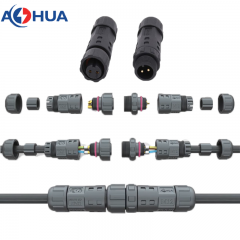
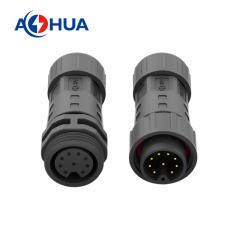
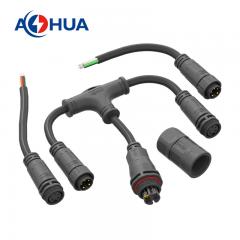
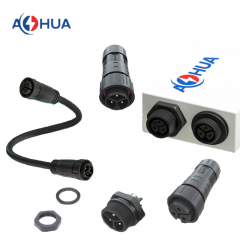
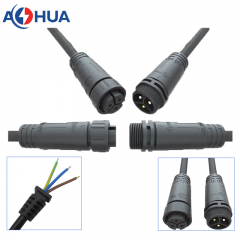
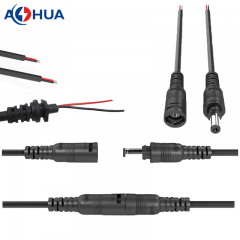
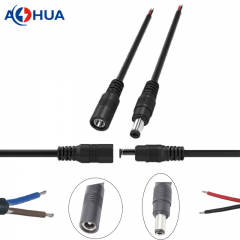
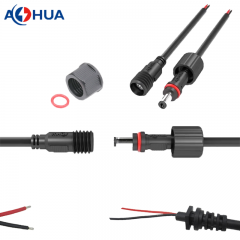

For years, the conversation around industrial connectors focused on three things: performance, price, and availability. Sustainability was an afterthought – if it was thought of at all.
That’s changing. New regulations (EU Ecodesign, RoHS, REACH), corporate ESG commitments, and customer demand are pushing manufacturers to rethink how connectors are made, used, and disposed of.
At AOHUA, we’ve been working on this for years – not because it’s trendy, but because it’s the right way to build products. A connector that fails in two years and gets thrown away is not sustainable. A connector that lasts ten years and can be repaired is.
Here’s what sustainable waterproof connector design actually looks like.
Most people think of electronic waste as old phones and laptops. But connectors are a silent contributor to the e‑waste problem.
Consider this:
A cheap connector that fails prematurely doesn’t just end up in landfill itself. It often takes the entire piece of equipment with it – because water ingress corrodes the control board, motor, or sensor.
The math: A 500 device creates 100x more waste than the connector alone. The most sustainable connector is the one that never fails.
We design our connectors around four core sustainability principles. You can use these same criteria to evaluate any supplier.
The greenest product is the one you don’t have to replace. A connector that lasts 10+ years has a fraction of the environmental footprint of one replaced every two years.
How we achieve long life:
UV‑stabilized housings (tested to 1000+ hours of UV exposure)
Silicone or Viton seals that remain flexible from -40°C to +125°C
Corrosion‑resistant gold or nickel plating over copper alloy (500+ hours salt spray)
Vibration‑resistant thread locking
Proof point: We have connectors still in service after 12 years on a solar farm in Arizona. The only maintenance has been two seal replacements.
Many modern connectors are overmolded – a single block of plastic and rubber with no user‑serviceable parts. When the seal fails, you throw away the whole connector.
We take a different approach.
Real impact: A customer with 2000 connectors in the field used to replace entire overmolded units every 3 years. After switching to our repairable series, they now replace only seals every 4 years and housings every 10+ years. Waste reduced by 80%.
Sustainability isn’t just about longevity. It’s about what the connector is made of.
Materials we avoid:
Cadmium (used in some cheap platings – toxic, banned by RoHS)
PVC (releases dioxins when incinerated, difficult to recycle)
Brominated flame retardants (persistent environmental pollutants)
Materials we prefer:
PBT and Nylon PA66 (thermoplastics – can be ground and reused)
Silicone rubber (inert, can be pyrolyzed to recover energy, no toxic fumes)
Copper alloys with gold/nickel plating (highly recyclable – copper has well‑established recycling streams)
Stainless steel or brass for metal housings (infinitely recyclable)
Certifications: All [Company Name] connectors are RoHS compliant (no lead, mercury, cadmium, hexavalent chromium, PBB, PBDE). We also meet REACH requirements for SVHC disclosure.
A connector’s carbon footprint isn’t just the product – it’s how it gets to you.
What we do:
Bulk packaging (bags of 100 or 500) instead of individual plastic bags for most series
Recyclable cardboard cartons – no unnecessary foam or blister packs
Regional warehousing (North America, Europe, Asia) to reduce air freight
Comparison: A typical connector from an overseas supplier might come in a small plastic bag inside a foam‑lined box. Our bulk pack uses 70% less plastic and fits 3x more connectors per shipping container – cutting transport emissions by two‑thirds.
Problem: Their old overmolded connectors failed after 18 months in salt spray. Entire sensor units ($$) were replaced, not just connectors.
Our solution: Metal‑housed, repairable IP68 connectors with Viton seals and replaceable gold‑plated contacts.
Result after 4 years:
Connector failures: from 15% per year to <0.5%
Sensors saved: over 200 units that would have been scrapped
Customer now reuses housings across multiple product generations – only internal contacts and seals are refreshed
Problem: Hundreds of charging stations were using non‑repairable connectors. After 3 years, many seals hardened, causing intermittent charging faults. The operator faced replacing 500 connectors – a costly and wasteful proposition.
Our solution: We supplied replacement seals and a simple field‑repair kit. A technician can swap a seal in 5 minutes without removing the entire connector from the station.
Result: 90% of connectors kept in service with new seals. Waste reduced by 90%. Cost savings: $35,000 in avoided replacements.
Sustainability is moving from “nice to have” to “must have.” Here are key regulations shaping the connector industry.
Our view: Regulations are catching up to what good engineering already does. We are actively preparing for ESPR by documenting material composition, designing for disassembly, and offering spare parts.
When sourcing waterproof connectors, ask your supplier these questions:
What is the expected lifetime under my actual operating conditions? (Not just lab ratings.)
Are seals and contacts replaceable, or is the connector overmolded?
Do you sell spare seal kits and contact sets?
Is the connector RoHS and REACH compliant? (Should be standard, but verify.)
What is the housing material – can it be recycled? Is it free of PVC and BFRs?
Do you offer bulk packaging to reduce plastic waste?
Can you provide a product environmental footprint or material declaration?
If a supplier can’t answer most of these, they are behind the curve.
Sustainability isn’t a marketing claim. It’s a daily practice.
Here’s what we’re doing beyond product design:
Factory solar panels: Our manufacturing facility offsets 30% of its electricity use with on‑site solar.
Waste recycling: Scrap copper, brass, and plastic from machining are segregated and sold to recyclers – nothing goes to landfill.
Water conservation: Closed‑loop cooling system for injection molding machines reduces water use by 80% vs. open loop.
Continuous improvement: We are working toward ISO 14001 (Environmental Management) certification this year.
We don’t claim to be perfect. But we are committed to transparently improving every year. And we invite our customers to hold us accountable.
Q: Are waterproof connectors recyclable at end of life?
Q: Does RoHS compliance affect connector performance?
Q: How can I dispose of old connectors responsibly?
Q: Do you offer a product carbon footprint (PCF) for your connectors?
Q: Can I buy just replacement seals to extend the life of my existing [Company Name] connectors?
We don’t make connectors that are “green” in a flashy way. We make connectors that are boringly reliable – year after year, in sun and rain, salt and dust.
That longevity is the deepest form of sustainability.
When you buy a [Company Name] connector, you are not just buying a component. You are buying fewer replacements, less waste, and lower total environmental impact over the life of your equipment.
Because the best thing for the planet is equipment that simply keeps working.
Part 1: The Hidden Environmental Cost of Cheap Connectors
Connector Type
Typical Lifespan
Waste Generated (per 1000 units)
Low‑quality, non‑sealed
1–2 years
1000 connectors + often the entire device they failed in
Mid‑quality, sealed
3–5 years
1000 connectors
High‑quality, repairable
10+ years
Only worn seals or damaged parts – housing and contacts reused
Part 2: Four Pillars of a Sustainable Waterproof Connector
Pillar 1: Long Lifetime (The “Fit and Forget” Principle)
Pillar 2: Repairability Over Replaceability
Feature
Our Standard Series
Typical Overmolded Connector
Replaceable seals
Yes (O‑ring and cable grommet)
No – integral molding
Replaceable contacts
Yes (crimp or solder)
No – molded in
Housing reusable after seal change
Yes
No – entire unit discarded
Special tool required for repair
No (basic hand tools)
N/A – cannot repair
Pillar 3: Material Choice – Avoiding Hazardous and Hard‑to‑Recycle Substances
Pillar 4: Efficient Packaging and Reduced Logistics Footprint
Part 3: Real Examples – How Sustainable Design Helped Our Customers
Case 1: Marine Navigation Equipment Manufacturer
Case 2: Electric Vehicle Charging Network Operator
Part 4: Emerging Regulations You Should Know
Regulation
Region
What It Means for Connectors
RoHS (Restriction of Hazardous Substances)
EU, UK, China, others
Bans lead, mercury, cadmium, etc. Standard for most connectors now.
REACH (Registration, Evaluation, Authorisation of Chemicals)
EU
Requires disclosure of Substances of Very High Concern (SVHC).
Ecodesign for Sustainable Products Regulation (ESPR)
EU (coming 2024–2026)
Will require repairability, recyclability, and digital product passports. Connectors likely included.
Right to Repair legislation
EU, some US states
Indirect effect – if equipment must be repairable, so must its connectors.
Plastic packaging tax
UK, Spain, others
Encourages recycled content in packaging – and eventually in products.
Part 5: What You Can Do – A Checklist for Sustainable Connector Procurement
Part 6: Our Ongoing Commitment
FAQ – Sustainability Edition
A: Partially. Metal shells and copper alloy contacts are highly recyclable. Plastic housings depend on local facilities – PBT and nylon are technically recyclable but not always accepted. We are exploring take‑back programs for high‑volume customers.
A: No. Modern RoHS‑compliant materials perform as well or better than older lead‑based alternatives. Our connectors meet or exceed all electrical and mechanical specs without restricted substances.
A: Separate metal and plastic if possible. Metal scrap can go to any recycler. Plastic housings: check if your e‑waste recycler accepts “mixed plastics”. If not, general waste is the last resort – which is why repairability and long life are so important.
A: Not yet for every series – but we can provide a PCF upon request for large projects. We are working with a third party to develop standardized PCF data for our most popular families by Q3 2026.
A: Yes. Spare seal kits are available for all our standard series. Contact our spares department with your connector part number.
Final Thought: The Most Sustainable Connector Is the One You Never Have to Think About

 86-0755-89999957
 colin@aohuadz.com