Tel : 86-0755-89999957 /
  Email : colin@aohuadz.com






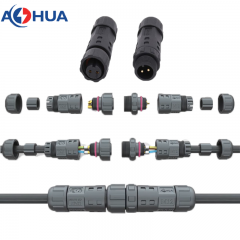
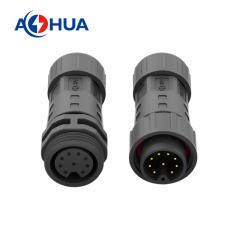
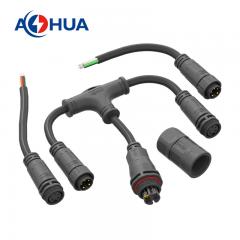
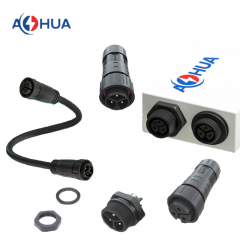
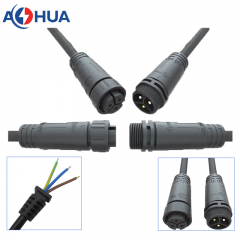
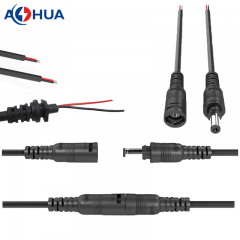
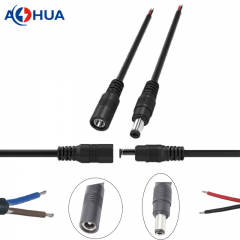
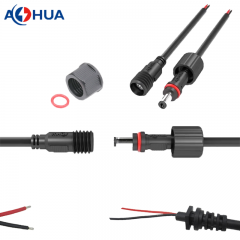
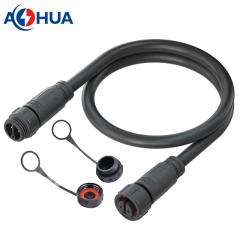
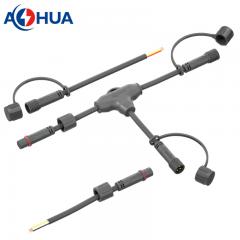
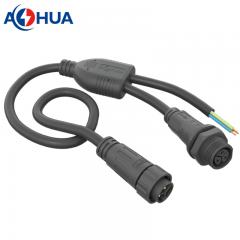

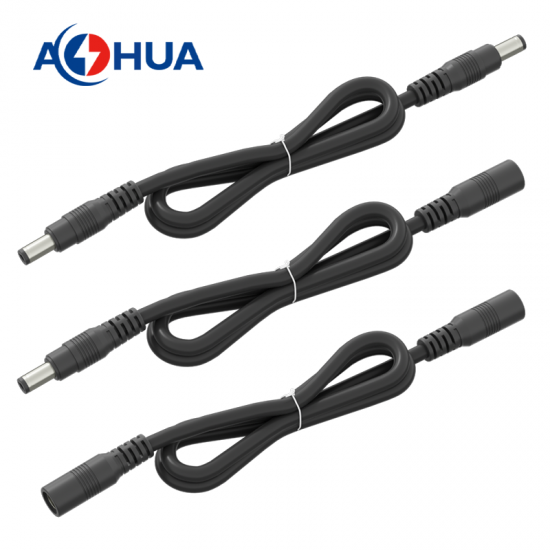
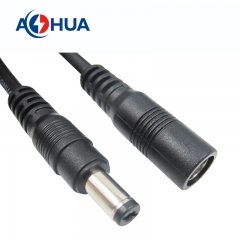
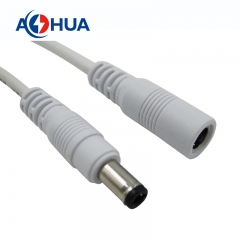
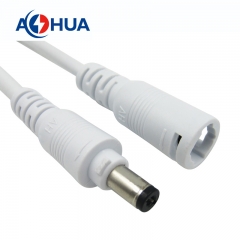
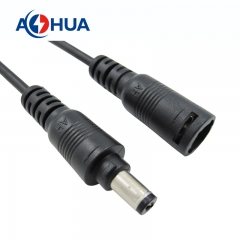
DC Power Connector Cable
DC power connector cable (typically DC 5.5×2.1 * 5.5*2.5 specification)
Applications: For instance, connecting an unused power adapter to a new device via such a cable, or extending the length of an existing power cord. It serves as a common accessory for DIY electronics power supply.
Specifications (Outer diameter × Inner diameter, unit: mm)
Typical application scenarios
Rated current range
Polarity (default)
2.5×0.7
Small tablets, micro-electronic devices
0.5-1A
Central positive electrode
3.5×1.35
Set-top box, webcam, LED desk lamp
1-2A
Central positive electrode
4.0×1.7
Portable DVD players, PSPs, smart speakers
1-3A
Central positive electrode
5.5×2.1(Most commonly used)
Routers, surveillance equipment, vehicle-mounted devices
2-5A
Central negative terminal / positive terminal (depending on equipment)
5.5×2.5
Laptops, high-power LED equipment
3-10A
Central positive electrode
6.5×3.0
Industrial equipment, professional audio
5-15A
Central positive electrode
Based on the DC connector, we can create numerous combinations.
Any change you can make a drawing and send us a picture to explan that, then we will help you to select a asuitable solution according to your picture.
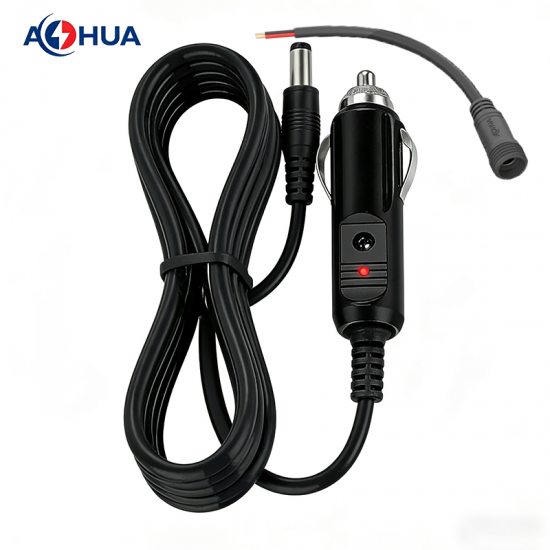
Like this pictue, I will show you the customized type connector:
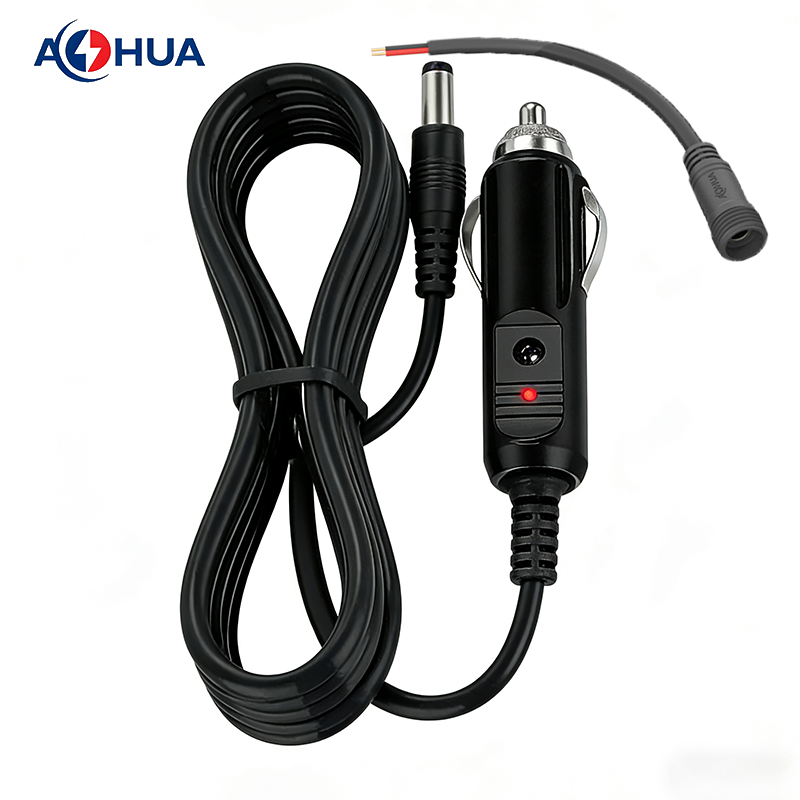
This is a vehicle DC power adapter cable, classified as an automotive power supply accessory. Key specifications are as follows:
Components:
- Vehicle cigarette lighter plug: Connects to the car's cigarette lighter socket for power supply, featuring a red indicator light (illuminates when powered);
- DC male connector: Standard 5.5×2.1mm specification (compatible with the corresponding female connector), designed for connection to the DC female port of the device;
Extension cable: Textured black wiring (typically 1-3 metres in length) for convenient in-vehicle device cabling.
-Function: Converts the vehicle's 12V DC power to a usable DC power supply for devices, commonly used for powering in-car surveillance systems, dashcams, vehicle LED lights, and similar equipment.
Precautions for using the vehicle power adapter cable to help prevent issues during operation:
1.Voltage compatibility: Ensure the device voltage (typically 12V) matches the cigarette lighter socket's output voltage to avoid damaging the device.
2.Cable Load: Do not connect high-power devices (e.g., appliances exceeding 100W) using thin cables to prevent overheating.
3.Wiring Safety: Ensure cables do not obstruct the brake or accelerator pedals. Route them along interior crevices where possible and avoid positioning them where they could be caught by doors.
4.Power Sequence: Plug into the cigarette lighter socket first, then connect the device. When disconnecting, unplug the device end first, by the cigarette lighter end to minimise electrical sparks.
5.Avoid Prolonged Power Connection: Disconnect promptly after switching off the ignition to prevent battery drain (note: some vehicle models maintain power to the cigarette lighter socket after ignition is off).
6.Check Connectors: Regularly clean dust from the cigarette lighter socket and DC connectors to prevent poor contact causing overheating.
How to Select the Appropriate Length for a Vehicle DC Power Adapter Cable?
Selecting the length of a vehicle DC power adapter cable primarily depends on the distance between the device installation location and the cigarette lighter socket. Consider the following scenarios:
Front-seat devices (e.g., dashcams): Opt for 1.5–2 metres to cover the distance from the windscreen to the front cigarette lighter socket, avoiding excess cable length and clutter.
Rear-seat devices (e.g., rear LED lights): Opt for 2.5–3 metres, sufficient to extend from the rear to the front cigarette lighter.
Special installations (e.g., roof-mounted devices): Based on the actual routing path (e.g., around the A-pillar or along the headliner), select 3–5 metres, allowing some extra length to prevent shortfalls.
The principle is "better longer than shorter, but avoid excess" – excess length leads to unnecessary coiling, while insufficient length proves inadequate. We recommend first measuring the approximate distance from the device to the cigarette lighter socket, then adding approximately 0.5 metres for allowance.

 86-0755-89999957
 colin@aohuadz.com